Natural Look & Long-Lasting Function
Just like your own teeth

 Cosmetic DentistryWant a Hollywood smile?
 General DentistryCavities, cracks, or gaps—
 Dental ImplantsMissing tooth? Get a strong,
 OrthodonticsCrooked teeth? Braces or
 InvisalignCrooked teeth? Invisalign
If you are looking for high-quality dental implants in San Diego, Soft Touch Dental Clinic provides a reliable and long-lasting solution for missing teeth. Using advanced 3D imaging and guided technology, we perform precise implant treatments designed for natural-looking and durable results. Our expert dental team is committed to restoring your smile with comfortable, modern care.
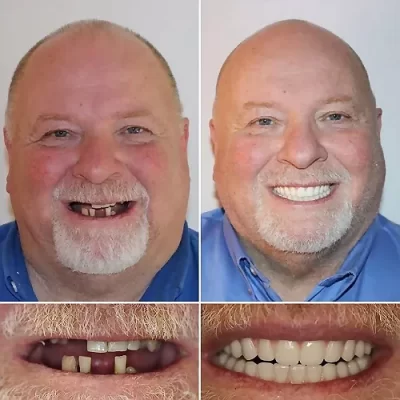
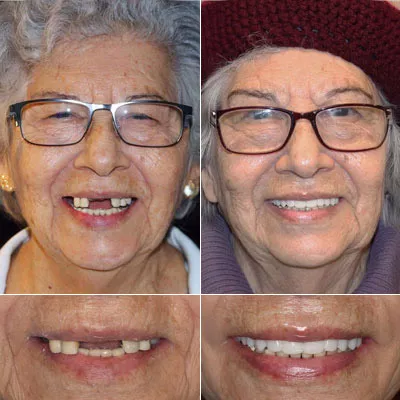

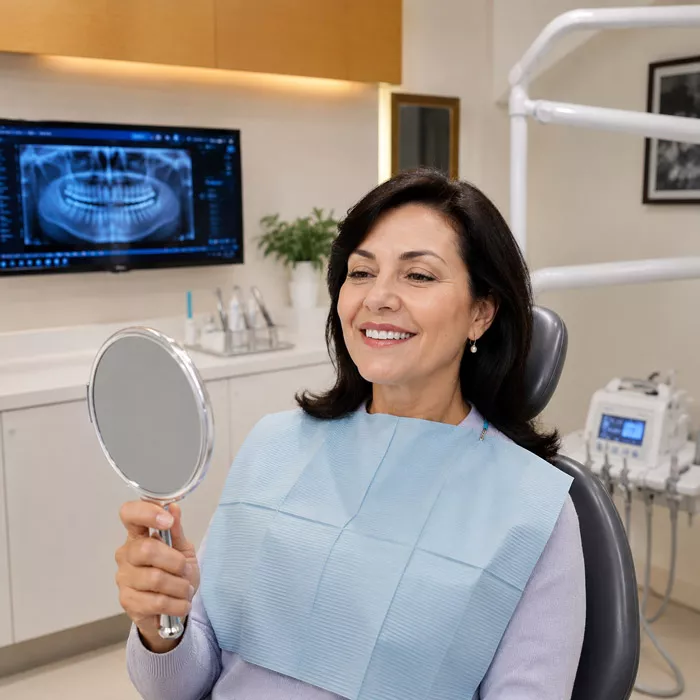
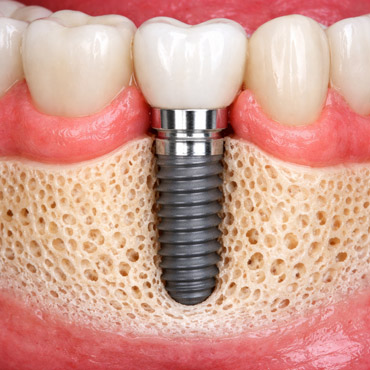
Dental implants are one of the most advanced solutions available today for replacing missing teeth. Unlike traditional dentures or bridges, implants restore the entire tooth structure from root to crown by using a small titanium post that is surgically placed into the jawbone. Titanium is used in implants because it is highly biocompatible, allowing the body to accept it as a natural part of the oral structure rather than rejecting it as a foreign material. Through a process called osseointegration, the implant gradually forms a direct connection with the surrounding bone, creating a strong and stable foundation that mimics the function of a natural tooth root. At Soft Touch Dental, Dr. Fakhimi places Neodent implants, part of the Straumann Group, a globally trusted implant system with decades of clinical research behind it.
After the healing period is complete, an abutment is attached to the implant, followed by a custom-made crown, bridge, or full-arch restoration. In full-arch dental implant procedures such as All-on-4 or All-on-6, multiple implants are used to support a complete dental arch. This three-part structure — the implant post, abutment, and crown or prosthesis — results in a restoration with a natural appearance and function. Unlike removable dentures, implant-supported restorations are fixed securely within the jawbone, providing greater stability during chewing and speaking without concerns about the prosthesis becoming loose or shifting.
Dental implants restore natural chewing ability and provide a permanent, long-term solution for missing teeth, helping patients regain comfort and confidence in everyday life while preserving jawbone density, maintaining natural facial structure over time, and providing reliable durability thanks to their secure integration into the jaw without affecting adjacent healthy teeth.
Just like your own teeth

Eat, Speak and Smile with Ease
Prevent Bone Loss and Preserve Strength

No Slipping, Unlike Dentures
At Soft Touch Dental, we provide a range of implant-based tooth replacement options in San Diego to suit different levels of bone support, oral health, and aesthetic goals, with each treatment plan fully customized to ensure long-term stability and natural-looking results. our dental team will recommend the most appropriate solution based on your individual needs, ensuring that every patient receives an effective and tailored treatment for long-term success.
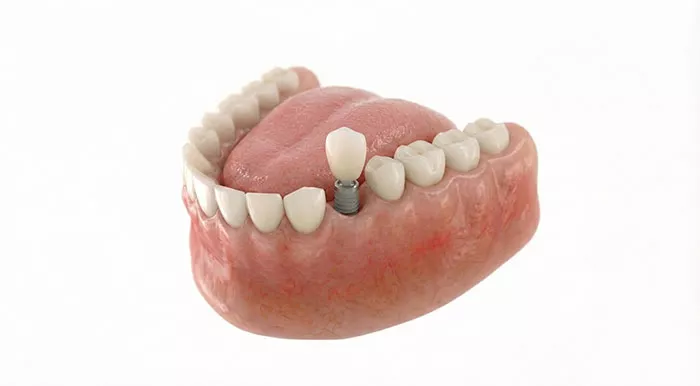
A single dental implant is a reliable long-term solution for replacing a missing or extracted tooth, restoring its natural function, structure, and appearance. It consists of three main components: a titanium post placed into the jawbone to act as an artificial root, an abutment, and a custom-made crown that replaces the visible part of the tooth.
After placement, a healing period of approximately 4 to 6 months is required to allow the implant to fully integrate with the jawbone. During this time, a temporary crown may be used to maintain appearance and function. Once healing is complete, a permanent crown is placed and carefully matched to the color, shape, and translucency of the surrounding teeth for a natural and seamless result.
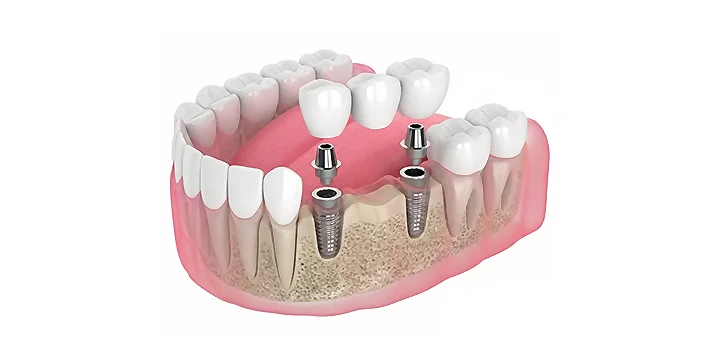
Multiple dental implants are an effective and stable solution for replacing several missing teeth, offering a fixed alternative to removable dentures. Depending on the number of missing teeth, two or more implant posts can be strategically placed in the jawbone to support a bridge of replacement teeth, meaning not every missing tooth requires an individual implant.
These implants provide strong support that helps maintain jawbone density and prevent nearby teeth from shifting over time. After the healing and integration process is complete, a custom-designed restoration is securely attached, restoring natural chewing function, comfort, and a balanced, natural-looking smile.
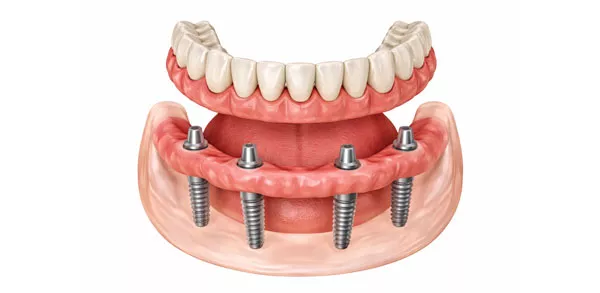
All-on-4 dental implants are a full-arch tooth replacement solution designed for patients who have lost most or all of their teeth. This treatment uses four strategically placed implant posts in the jawbone to support a fixed full set of replacement teeth, providing a stable and long-lasting alternative to traditional dentures.
The implants are positioned at specific angles to maximize bone support, often eliminating the need for bone grafting. After the healing period, a custom-made fixed prosthesis is attached, restoring natural chewing ability, speech, and a balanced, natural-looking smile with improved comfort and stability. For many, this is the same procedure known as teeth in a day in San Diego — new, fixed teeth in a single visit. Patients who have experienced more extensive bone loss may instead be candidates for All-on-6 dental implants, which use six implant posts for even greater stability and support.
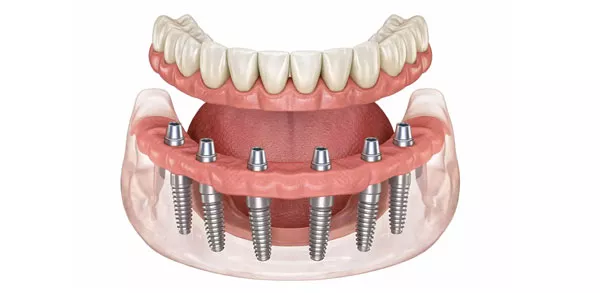
All-on-6 dental implants offer a full-arch restoration using six implant posts to support a complete set of replacement teeth. This approach provides additional stability and support compared to fewer implants, making it suitable for patients who require enhanced strength and long-term durability.
The implants are placed in the jawbone to create a strong foundation for a fixed prosthesis. After the healing and integration phase, a custom-designed full arch of teeth is securely attached, restoring full chewing function, improved comfort, and a natural-looking smile with long-term reliability.
Most patients who have lost one or more teeth and are in good overall health may be suitable candidates for dental implant treatment. However, certain conditions such as uncontrolled diabetes, bleeding disorders, or immune system problems can affect healing and overall treatment success. Adequate jawbone volume, good oral hygiene, and avoiding smoking are also important factors that contribute to long-term results.
In some cases, patients may require additional preparation before treatment. The most accurate way to determine your eligibility is through a consultation with an implant specialist, who will review your medical history and perform a detailed clinical examination.
Book AppointmentDigital implant is an advanced method of dental implantation that is performed using intraoral scanning, CBCT three-dimensional imaging, and CAD/CAM digital design. In this method, the condition of the bone, nerves, and position of the teeth is evaluated in 3D, and the entire treatment process is precisely planned and designed before surgery. This technology leads to reduced surgical errors, less tissue damage, less swelling, and faster recovery.
At Soft Touch Dental, digital implant is performed with the goal of reducing treatment complexity and creating a more comfortable experience for patients. Also, for individuals who have dental anxiety or require long treatments, the use of Sedation is available to provide greater comfort during the procedure.
The dental implant process at Soft Touch Dental is carefully planned and tailored to each patient’s condition, starting with a detailed evaluation of your oral health and treatment needs, followed by a step-by-step treatment plan designed to ensure safe, predictable, and effective results, while throughout the procedure our focus remains on delivering a precise and comfortable experience that supports long-term function and a natural-looking outcome to restore both your smile and everyday oral performance.
Your journey begins with a thorough consultation with Dr. Fakhimi. We perform a comprehensive examination, including advanced 3D imaging (CBCT), to assess your oral health and jawbone structure. This allows us to create a precise, personalized treatment plan, ensuring the best possible outcome for your smile.
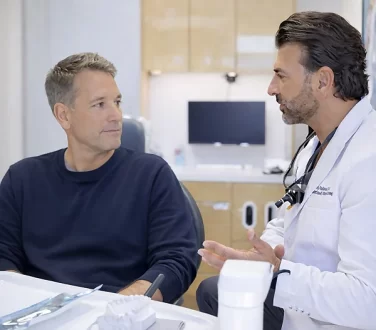
Once the planning is complete, the titanium implant post is surgically placed into your jawbone. This is a minor procedure, and we use local anesthesia and sedation options to ensure you feel no discomfort. The implant acts as a new tooth root, providing a strong and stable foundation for your future crown.
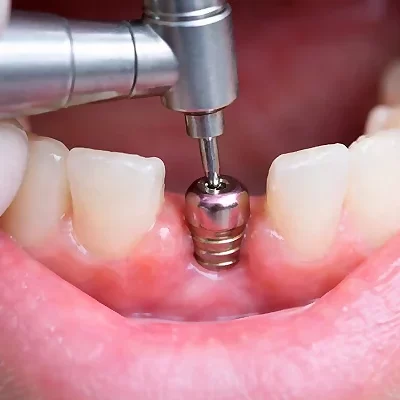
After placement, a crucial healing period (osseointegration) begins as the implant fuses with your jawbone. To ensure your comfort and aesthetics, we provide temporary restoration options so you never have to worry about a gap in your smile while the implant heals.
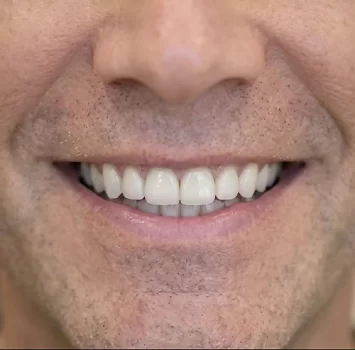
Once the implant is fully healed, we attach a small connector called an abutment. Finally, your custom-made porcelain crown is placed on top. The crown is meticulously crafted to match the size, shape, and color of your natural teeth, creating a flawless and functional restoration.
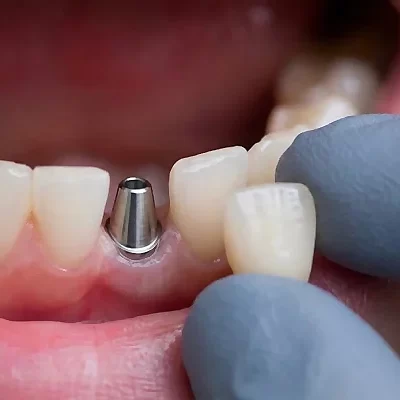
Your journey concludes with a follow-up appointment to ensure everything feels comfortable and your new implant is functioning perfectly. With proper care, your dental implant can last a Long time.
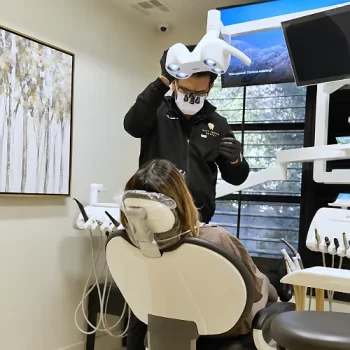
Dental implant costs in San Diego vary depending on your oral health, jawbone condition, and the type of treatment required. Factors such as the number of implants needed, whether you choose a single implant or a full-arch solution like All-on-4 or All-on-6, and the materials used for the final restoration all influence the total cost. In some cases, flexible payment options may be available to help make treatment more accessible.
The Cost depends on whether you need a single implant or a full-arch solution like All-on-4 or All-on-6.
Additional treatments like bone grafting or sinus lifts may be needed if jawbone support is insufficient.
The crown material, such as zirconia or porcelain, can affect both cost and aesthetics.
With proper care, dental implants can last 20 years or more, and in many cases even a lifetime. Their long-term stability comes from the titanium post, which integrates with the jawbone to create a strong and durable foundation.
While the implant itself is designed for long-term use, the crown placed on top may need replacement over time due to normal wear. Good oral hygiene, regular dental check-ups, and avoiding habits such as smoking can help extend the lifespan of the implant.

Recovery after dental implant surgery typically occurs in three main stages. During the first 3 to 7 days, mild swelling, bruising, or soreness is normal and can be managed with prescribed medication. Most patients are able to return to daily activities within 24 to 48 hours by following a soft diet and avoiding strenuous activity. In the following months, a process called osseointegration takes place, where the titanium implant gradually fuses with the jawbone to create a strong and stable foundation, supported by good oral hygiene, soft nutritious foods, and avoiding smoking.
Once healing is complete, a custom abutment and permanent crown are placed to restore full function and appearance. With proper care and regular dental check-ups, the implant can provide long-term, reliable results.
Affordability shouldn’t mean lower quality, it should be the result of delivering exceptional implant care. Over 25 years of practice across our Clairemont and Hillcrest clinics, Dr. Fakhimi has developed a 3D-guided, sedation-supported process that has restored more than 5,000 smiles. It is this clinical precision and expertise that allows us to offer affordable dental implants in San Diego with monthly payments starting at $100, the same high standard of care, on terms that make it easier to reach.
Book AppointmentWhen one or more teeth are missing, it’s not just the appearance of your smile that matters; in fact, your body reacts very quickly to this change. The bone that previously supported the tooth root begins to break down without stimulation, which can gradually change the shape of your face and even make you look older. Adjacent teeth may also shift into the empty space, leading to bite misalignment, making chewing more difficult, and potentially causing jaw joint pain. In addition, poor chewing function due to missing teeth can contribute to digestive problems over time.
Dental implants can be customized based on the number of missing teeth, the condition of the jawbone, and each patient’s specific needs. Depending on the situation, different implant-supported solutions are available, including Single Tooth Implants for replacing one missing tooth with an individual implant and crown, Implant-Supported Bridges for replacing multiple missing teeth using fewer implants as support, and Implant-Supported Dentures for patients who need a more stable alternative to traditional removable dentures. Implant-supported dentures can be either fixed or removable; fixed options are securely attached to the implants and cannot be removed by the patient, while removable options can be taken out for cleaning while still providing greater stability than conventional dentures. For patients with extensive tooth loss, fixed full-arch solutions such as All-on-4 and All-on-6 dental implants can restore an entire arch of teeth using strategically placed implants. These treatments provide a stable, permanent alternative to traditional dentures by securely supporting a full set of teeth. In cases where all teeth are missing or require replacement, Full Mouth Dental Implants provide a comprehensive solution for restoring both function and appearance.
There are several ways to replace missing teeth, but each option works differently and offers varying long-term benefits. Choosing the right method depends on your oral health, lifestyle, and personal goals for comfort, function, and appearance
While dental implants are ideal for replacing missing teeth, some patients who are focused mainly on cosmetic improvements may benefit from porcelain veneers for enhancing the appearance of their natural smile.
Soft Touch Dental is conveniently located on Clairemont Mesa Boulevard in San Diego, CA, just minutes from La Jolla, Pacific Beach, Mission Valley, and University City. Our office is easily accessible from I-5 and I-805, with ample on-site parking and a fully wheelchair-accessible entrance and restroom for all patients.
Sedation dentistry for dental implants, helps patients stay relaxed and anxiety-free during implant surgery. This approach makes sedation dental implants more comfortable by creating a calm, semi-conscious state that allows the dentist to place implants more efficiently, sometimes even multiple implants in a single session. It also reduces discomfort and prevents patients from remembering unpleasant details of the procedure. Although generally safe, sedation may cause temporary side effects like drowsiness or nausea, so patients should avoid driving or operating machinery for at least 24 hours afterward.
The full dental implant process typically takes 3 to 6 months, depending on your jawbone health and individual needs. The most important phase is osseointegration, where the implant gradually fuses with your jawbone to create a strong, stable foundation for your new tooth. Once healing is complete, a custom abutment and crown are placed to restore both function and appearance. In cases where bone grafting is needed, the timeline may be longer. However, for some patients, advanced techniques such as immediate-load implants can significantly reduce the overall treatment time.
Many people think dental implants are only about restoring a smile but they actually play a crucial role in protecting your overall health. When a tooth root is lost, the jawbone begins to shrink due to lack of stimulation, which can lead to sunken cheeks and a prematurely aged appearance. Dental implants act like natural tooth roots, helping preserve bone structure and prevent these changes. In addition, missing teeth can reduce your ability to chew properly, placing extra strain on your digestive system and limiting how well your body absorbs essential nutrients. With dental implants, you can:
Gum recession around dental implants, especially in the anterior (front tooth) region, can lead to the exposure of a metallic edge or a dark shadow at the gum margin which directly affects smile aesthetics and a person’s confidence; to prevent this issue, precise selection of implant position and angulation, the use of high-quality implants and abutments, careful assessment of jawbone volume, proper crown design in harmony with the gum line shape, and maintaining good oral hygiene all play a critical role, as any inflammation or loss of tissue volume over time can result in gum recession and the exposure of underlying implant components.
In some cases, you may need bone grafting before getting dental implants. This is often necessary if you’ve experienced bone loss due to aging, long-term missing teeth, advanced gum disease, or injury. When the jawbone doesn’t have enough strength or density to support an implant, bone grafting helps rebuild and reinforce the area. This procedure adds volume to the bone, creating a stable and secure foundation for your future implant. At Soft Touch Dental, we use advanced grafting techniques and modern technology to restore your jawbone with precision and care. Even if you’ve experienced significant bone loss, dental implants may still be a reliable and natural-looking solution for you.
Based on clinical studies, the success rate of dental implants is usually reported to be between 95% and 98% percent. This high number is due to the direct connection of the implant to the jawbone (osseointegration), which creates a very stable base. However, the success of the treatment depends on several factors, including:
The patient's general health
The quality of the bone
Oral Health and Medical History
Practitioner’s experience
Dental implant failure happens when the implant does not properly integrate with the jawbone or becomes unstable after placement. Although dental implants have a high success rate, failure can still occur due to infection (peri-implantitis), poor oral hygiene, smoking, or insufficient bone support. Other causes include uncontrolled medical conditions such as diabetes, excessive teeth grinding, or surgical complications like improper implant placement. In most cases, good oral hygiene, proper planning, and regular dental check-ups can significantly reduce the risk of implant failure.
To ensure this valuable investment lasts a lifetime, it’s important to understand that the main threat is not wear and tear, but rather silent inflammation. In fact, the lifespan of a Dental Implant depends more on the health of the surrounding gum tissue than on the titanium screw itself. Using specialized tools such as super floss and water flossers is essential to remove plaque that regular brushing cannot reach. Smoking is also one of the biggest threats to implant success, as it reduces blood flow to the surgical site and slows down the healing process.
Dental implants, like any surgery, are not without risks. Some of these risks include infection at the implant site, which is usually preventable with good oral hygiene and proper post-operative care. In rare cases, the implant may not fuse properly with the bone, which can be related to factors such as bone quality or excessive pressure on the implant. Damage to surrounding nerves or tissues is also a rare but significant complication and is usually minimized through careful planning and the use of advanced imaging technologies.
Dental implants should be cared for just like natural teeth to ensure they remain healthy, functional, and long-lasting. Proper implant cleaning starts with brushing at least twice a day using a soft-bristled toothbrush and non-abrasive toothpaste to remove plaque without scratching the implant crown or irritating the surrounding gum tissue. Daily flossing is essential, especially around the implant gumline where bacteria can accumulate and lead to inflammation or peri-implantitis, a condition similar to gum disease that can threaten implant stability. Many patients also benefit from using water flossers, interdental brushes, or implant-specific floss to clean hard-to-reach areas more effectively. In addition to at-home care, regular dental checkups and professional cleanings every 3–6 months allow your dentist to monitor bone health, gum condition, and implant integrity before small issues become serious problems. Avoid smoking, excessive alcohol use, chewing ice, or using your teeth as tools, as these habits can weaken the implant and surrounding structures over time.
Dental insurance may cover a portion of your dental implant treatment, but coverage depends on your provider, plan type, and specific benefits. Many PPO dental insurance plans in the United States help pay for services related to implants, such as consultations, digital X-rays, tooth extractions, bone grafting, and even part of the implant or final crown cost, up to an annual maximum. Some insurance companies classify implants as a cosmetic procedure and provide limited coverage, while others offer partial reimbursement when implants are considered medically necessary. At Soft Touch Dental, our team carefully reviews your insurance benefits before treatment begins, explains your estimated out-of-pocket costs, and helps maximize every available benefit. We also offer flexible financing options, monthly payment plans, and guidance on using HSA or FSA accounts to make treatment more affordable. Even if your insurance does not fully cover implants, many patients are still able to significantly reduce costs through a combination of insurance benefits and financing solutions.
Choosing the best dentist for dental implants in San Diego is one of the most important factors in achieving successful, long-lasting results. A properly planned implant treatment requires precision, advanced diagnostics, and a coordinated approach between an implant specialist and a restorative dentist to ensure optimal function, aesthetics, and stability. When evaluating your options for tooth replacement and implant dentistry, scheduling a consultation is essential to understand experience, treatment planning methods, and available solutions. At Soft Touch Dental, our team provides comprehensive implant treatment using advanced technology and a collaborative, patient-focused approach to deliver natural-looking and durable results.

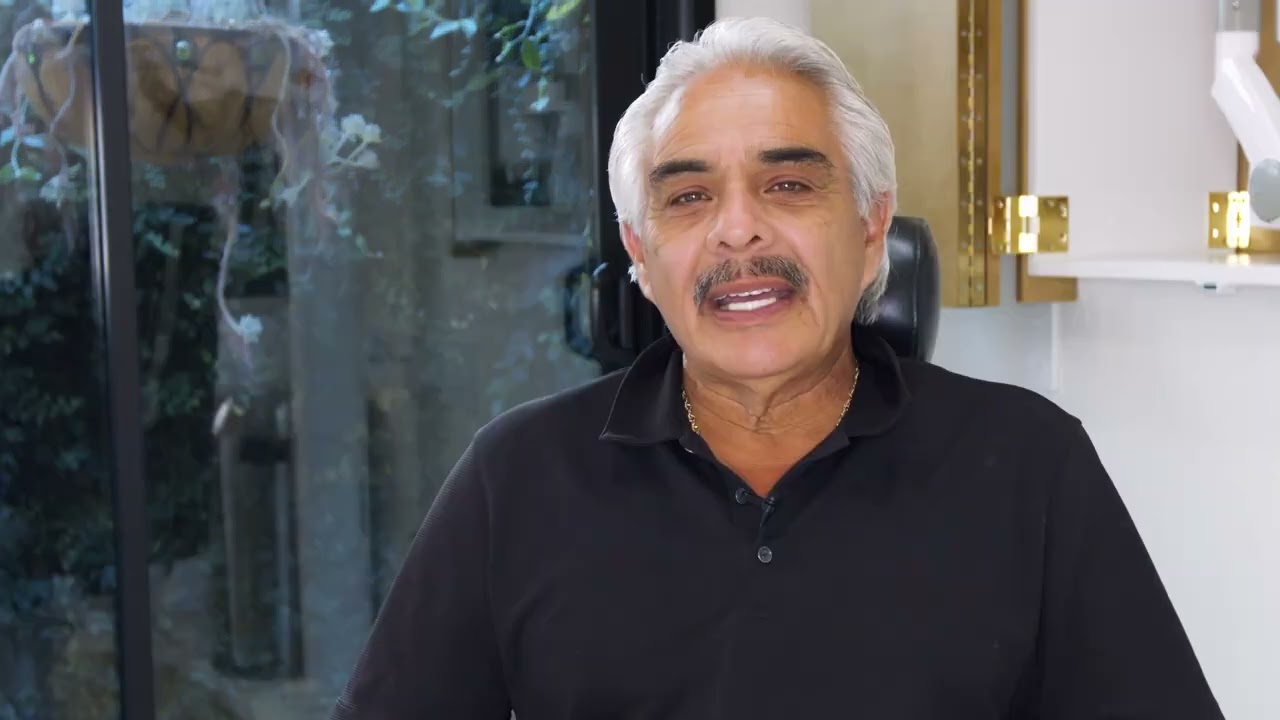
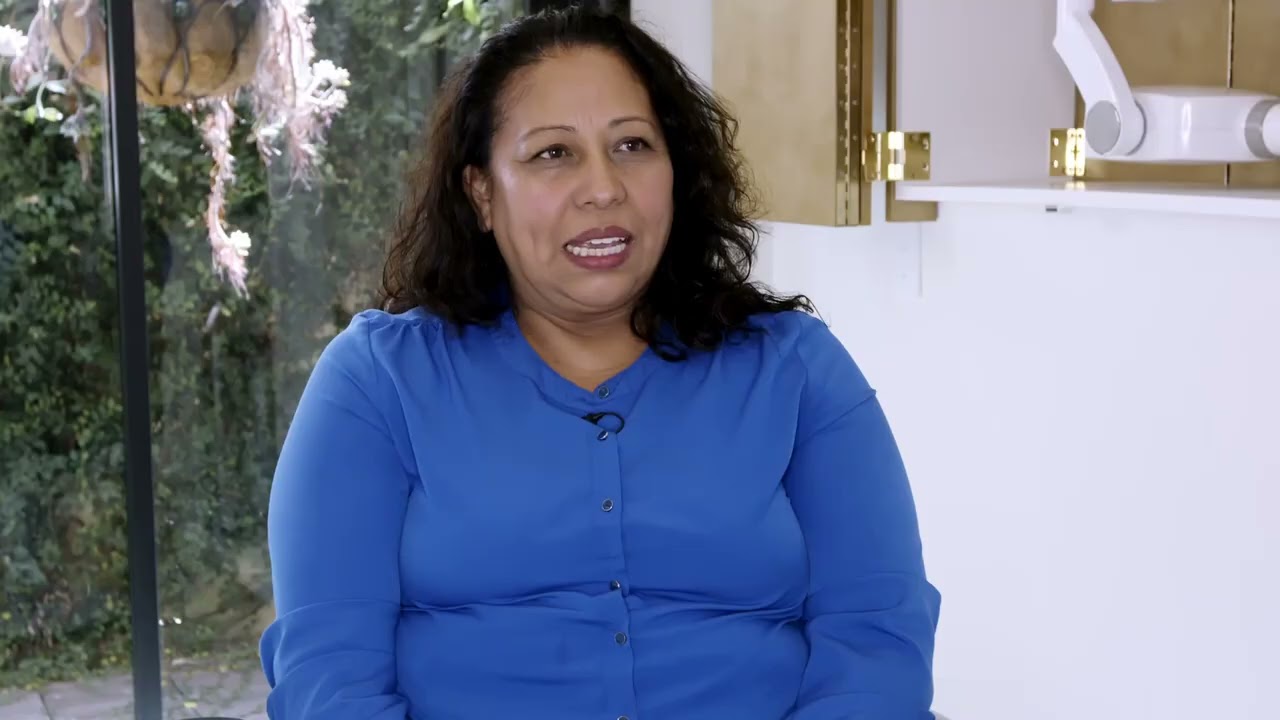
Patients travel from across California to work with Dr. Fakhimi He is easy to talk to, pays close attention to detail, and consistently delivers great results.

Common questions about dental implants in San Diego. Still unsure? Call us — we’re happy to help.
Book your free implant consultation online, or call and we’ll find a time that fits.
Book Appointment (858) 274-8200Patients in San Diego choose Soft Touch Dental for dental implants because of our precision, advanced technology, and personalized approach to care. Every implant treatment plan is carefully designed to deliver natural-looking results, long-term stability, and confident everyday function.
Our goal goes beyond restoring missing teeth. We use dental implants to help patients regain comfortable chewing, renewed confidence, and long-term oral health for a healthier, more complete smile.